See also carafes & decanters.
Three different jobs
1. Sediment removal
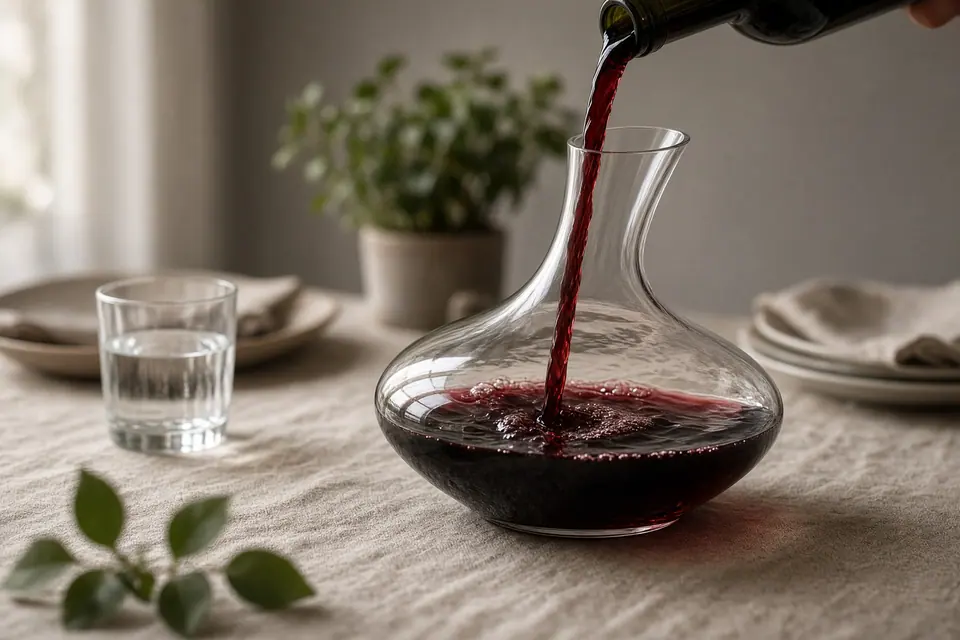
Older reds (and some ports) can throw sediment. Decanting leaves grit in the bottle and clear wine in the carafe.
How: Stand bottle upright for hours if you can; pour slowly above a light; stop when sludge reaches the neck.
2. Aeration / opening up
Young, tight wines — especially tannic reds — can soften and show more aroma with air.
How: Pour into a wide decanter; give it time (15 minutes to a few hours depending on the wine). Taste as you go.
3. Temperature and service
A carafe can help you serve without wrestling a heavy bottle at the table. That is logistics, not magic.
When decanting helps
- Visible sediment
- Young structured red that smells muted or tight
- You want to check for faults before guests pour themselves a full glass of disappointment
When you can skip it
- Most fresh whites and rosés (fridge + glass is enough)
- Delicate older wines that might fade fast with aggressive air (sometimes short decant or just careful pour)
- Cheap wine that is simply not very good — oxygen is not a miracle worker
- Sparkling — you will flatten the point of it
Carafe vs decanter shape
- Wide base: more surface area → faster aeration
- Narrow elegant carafes: prettier service, slower air effect
- Water carafes: not the same job; still excellent for table theatre with water — see water
Practical timeline
| Wine situation | Starting approach |
|---|---|
| Sediment risk | Slow decant just before serving |
| Young tannic red | Decant 30–90 min; taste |
| Soft weeknight red | Optional; glass swirling may be enough |
| White with slight reduction (struck match) | Short air can help; do not over-oxygenate |
Faults air will not fix
Cork taint, heat damage, vinegar spike — decanting does not redeem them. Trust your nose.
Which bottles benefit, style by style
Decanting advice is easier to follow by wine style than in general terms:
| Wine | Decant? | Why |
|---|---|---|
| Vintage port | Yes, always | Unfiltered, with heavy sediment. Stand the bottle upright for a day or two first, then pour slowly off the sediment |
| Young, tannic reds (Barolo, Bordeaux, Cabernet-based) | Often helps | Air can soften a firm, closed young wine over an hour or so |
| Mature reds (15+ years) | Carefully, just before serving | Pour off the sediment, then drink promptly; old wine can fade quickly once opened |
| Everyday reds under £12 | Rarely needed | Pouring into glasses and waiting a few minutes does the same job |
| Crisp whites and rosé | No | They're made to be fresh; air adds little |
| Full whites (oaked Chardonnay, white Burgundy) | Sometimes | Can help a wine that smells reduced (struck match), and a cooler carafe suits it |
| Sparkling wine | No | Decanting knocks out the bubbles |
Reading the signals
If a red smells tight or of struck match when first poured, air will usually help. If it smells of wet cardboard or musty cellar, it's probably cork-tainted, and no amount of decanting will fix it — see wine faults. If you're unsure, pour one small glass and taste it again after 15 minutes. That tells you more than any rule.
No decanter?
A clean glass jug, water carafe or even a large jar does the job for aeration. For sediment, a torch or phone light under the bottle's shoulder while you pour lets you see when to stop. Rinse any vessel with water only; detergent residue flattens aroma.
Serving temperatures that matter more than decanting
For most everyday bottles, temperature changes the taste more than air does. British homes are often warmer than the "room temperature" the phrase was coined for, so reds are frequently served too warm and whites too cold.
| Style | Serve at roughly | At home |
|---|---|---|
| Sparkling wine | 6–10°C | Fridge for three hours, or an ice bucket with water for 20–30 minutes |
| Crisp whites and rosé | 7–10°C | Fridge, then out for ten minutes before pouring |
| Fuller whites (oaked Chardonnay) | 10–13°C | Fridge for an hour or two, not overnight |
| Light reds (Pinot Noir, Beaujolais, Gamay) | 12–14°C | Twenty minutes in the fridge |
| Medium and full reds | 15–18°C | A cool room, or ten minutes in the fridge on a warm evening |
| Vintage and tawny port | 16–18°C (tawny can be served slightly cooler) | A cool room |
A wine that's too cold tastes muted; too warm and the alcohol and oak stand out. If you decant a red on a hot evening, stand the decanter somewhere cool rather than next to the oven or in the sun on a table.
A simple rule when you don't have a thermometer: whites come out of the fridge a little before you sit down, and reds go in for a short while before you pour.
Related
Related
FAQ
Do I need expensive glassware?
No. A few good shapes beat a fragile museum.
Is English wine always worth the premium?
Sometimes. Use criteria, not patriotism alone.
Can pour-over replace a cafe?
For filter clarity at home, often yes. For milk drinks, not always.