Real requirements
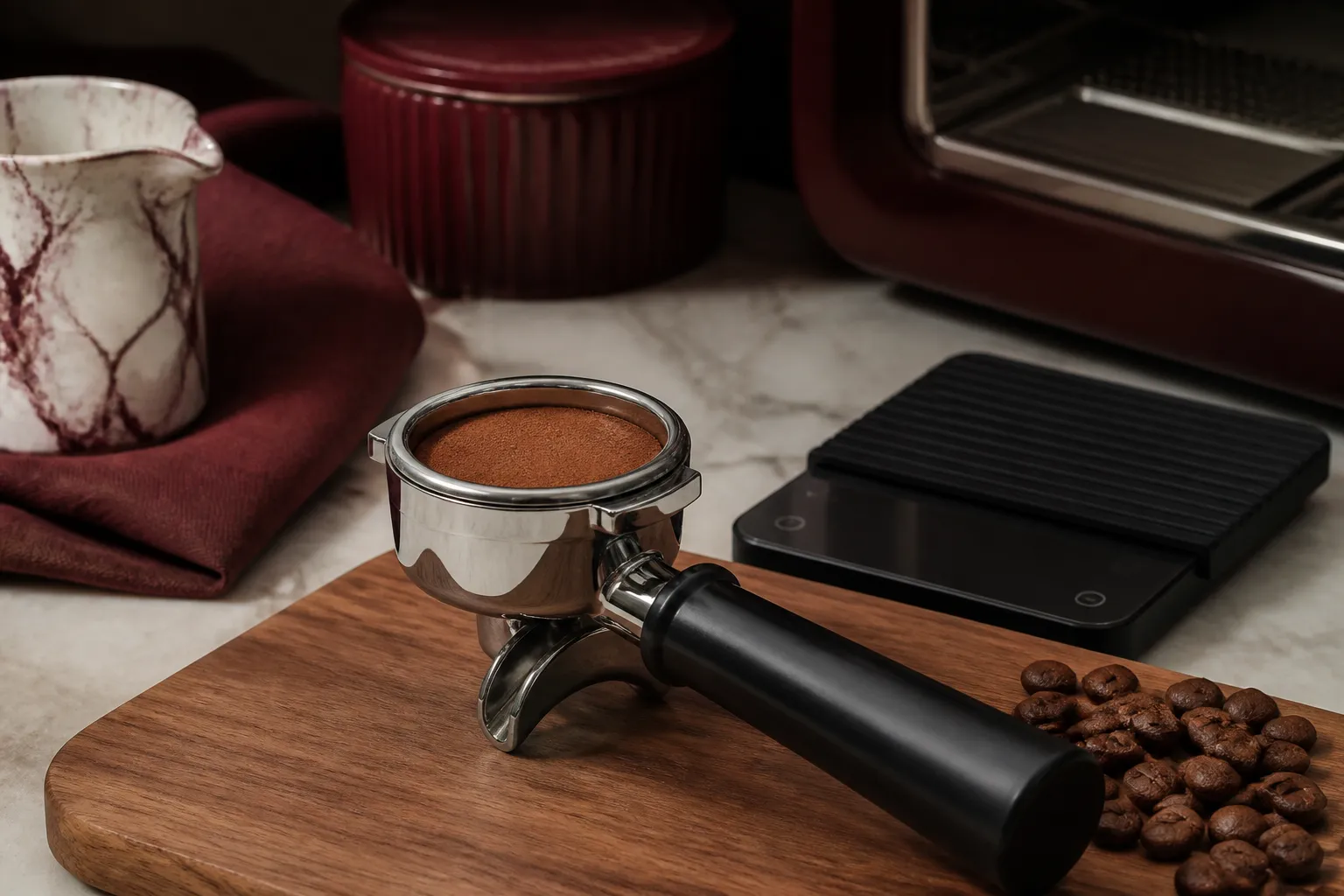
- Burr grinder capable of fine, consistent espresso range
- Machine that can hold temperature reasonably
- Fresh beans and weighing habit
- Water that is not extreme (see water for coffee and water)
- Time to practice
Expectation management
Cafe milk drinks rely on steam power and repetition. If you want flat whites daily, budget for workflow — not only badge engineering.
Starter practice loop
Dose → yield → time → taste. Change one variable per shot session.
System cost honesty
Budget for grinder quality first. A weak grinder makes expensive machines look broken. Practice with dose/yield/time notes; cafe milk drinks need steam workflow, not only badges.
A starting recipe and how to adjust it
Espresso has more variables than any other brewing method, so it helps to fix most of them and change one at a time. A common starting point used by baristas and in the Specialty Coffee Association's training is a ratio of about 1:2: for example, 18 g of ground coffee in the basket producing about 36 g of espresso in the cup, in roughly 25 to 30 seconds.
To use that, you need two things many beginners skip: a small digital scale that reads to 0.1 g, and a timer. Put the cup on the scale under the portafilter and stop the shot when the weight reaches your target.
Taste, then change one thing
| What you taste | Likely cause | First thing to change |
|---|---|---|
| Sour, thin, sharp | Under-extracted: water ran through too fast | Grind finer |
| Bitter, dry, harsh | Over-extracted: water ran through too slowly | Grind coarser |
| Weak but balanced | Ratio too long | Stop the shot earlier (e.g. 18 g in, 32 g out) |
| Strong but pleasant | Ratio short | Fine if you like it; try a longer ratio for more clarity |
| Channelling (spurts, blond streaks early) | Uneven puck | Break up clumps, level the grounds, tamp straight |
Why the grinder matters more than the machine
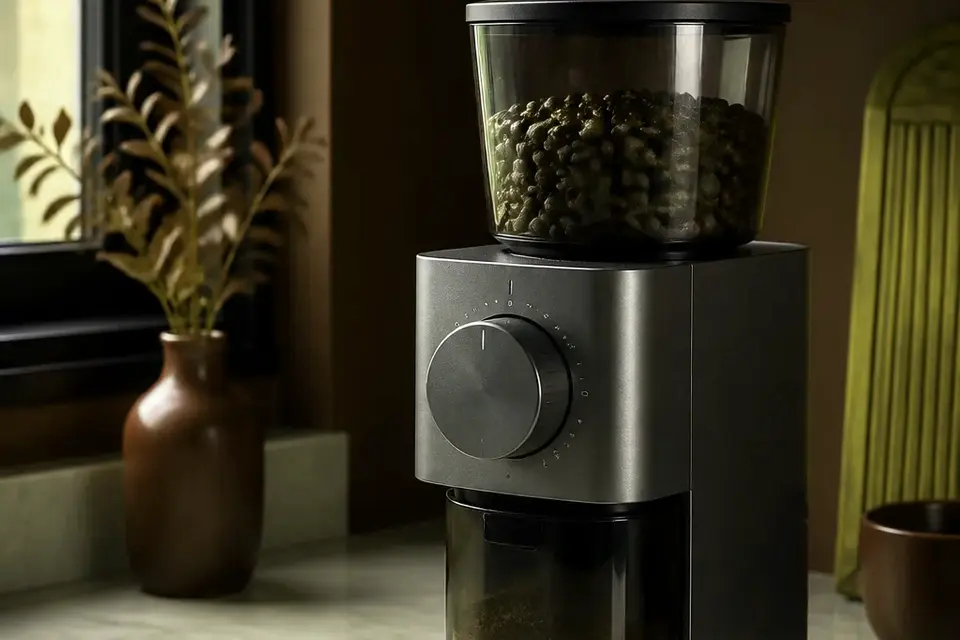
A machine can only push water through what the grinder gives it. Espresso needs very fine, even grinding with small adjustments, which is why a capable burr grinder often matters more than a more expensive machine — see coffee grinders. Pre-ground supermarket coffee is usually too coarse and too stale for good espresso, though it's fine for a cafetière.
Beans and water
Use beans roasted within the last few weeks, ideally with a roast date on the bag — UK roasters covers how to choose. In hard-water areas, which include much of south-east and eastern England, scale builds up inside machines quickly. Filtered water protects the machine and often improves taste; follow your manufacturer's descaling advice, because some warranties depend on it.
Related
Espresso shopping (Amazon UK)
- Entry espresso machine — the De'Longhi Dedica and Stilosa are common entry machines with 51 mm baskets. Both come in several colours, so check the model number in the listing before you buy.
- Espresso-capable grinder
- Knock box
- Tamper — the Dedica and the Stilosa take a 51 mm basket. Tampers sized 53–54 mm fit Sage/Breville machines instead, so check your basket before buying. Start with this 51 mm tamper search.
- Milk jug
Full glassware and coffee list: glassware basics.
As an Amazon Associate I earn from qualifying purchases.
Dial-in basics
Change one variable at a time: grind, dose, yield, time. Notes beat memory. Bad shots are data.
Milk reality
Texture takes practice. Start with slightly cooler milk than you think. Watch tutorials from people who measure, not only pose.
Expectation management
Café gear and café volume produce café results. Home espresso is a craft hobby with great mornings and humbling ones. Budget for a grinder that can keep up — grinders.